
Crack Sealing Before Coating
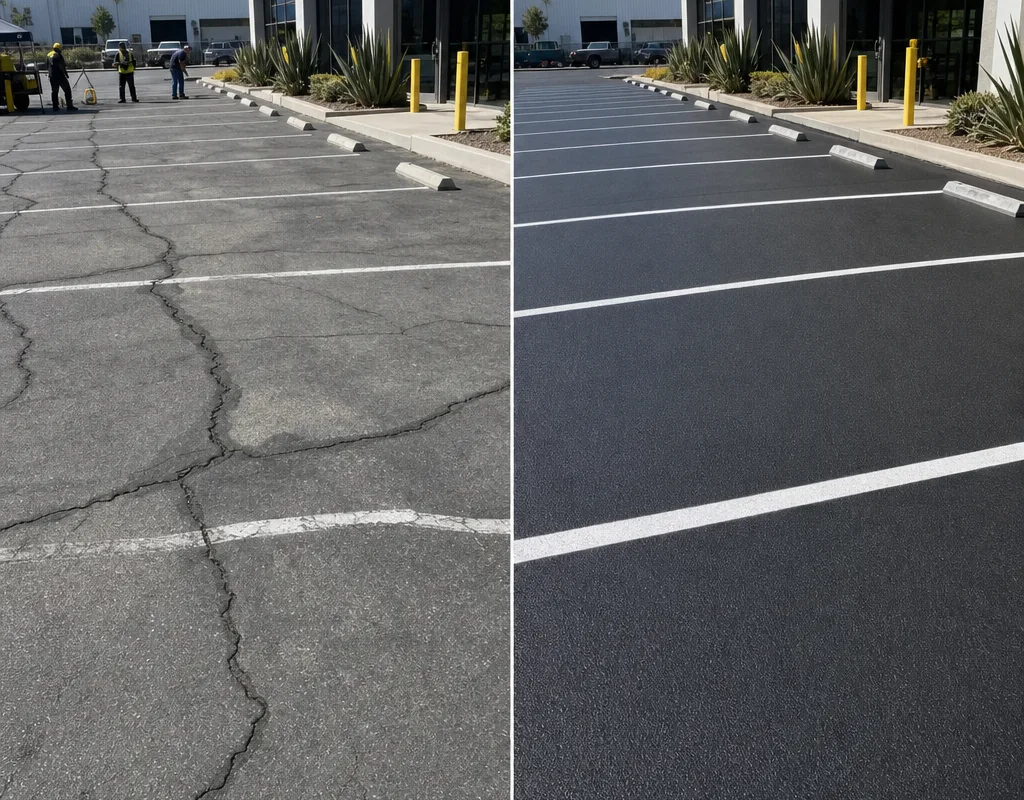
Cracks are treated as their own job and completed first. Filling them properly is what gives the coating a continuous surface to protect instead of a set of gaps to span.
Serving Los Angeles, California & surrounding areas
Mon–Fri 8am–6pm Sat 9am–2pm
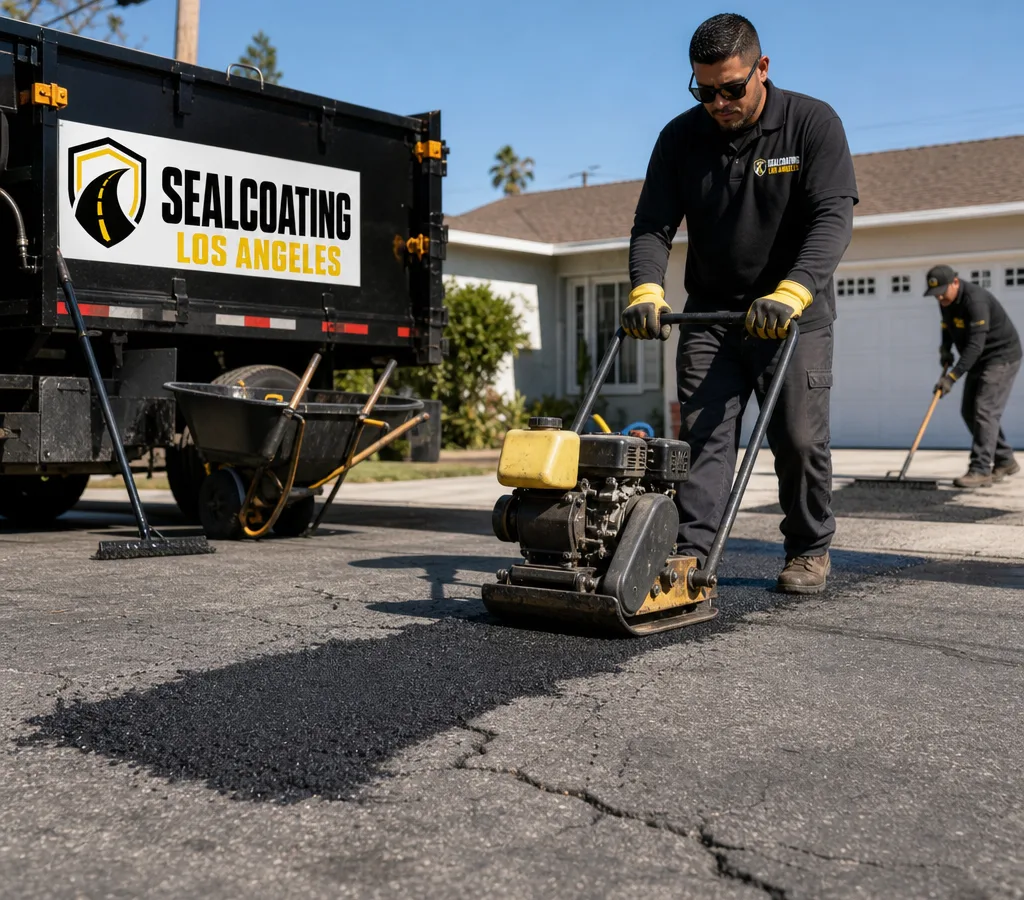
Asphalt out here expands and contracts through a wide daily range, so cracks open and close all year. Treating them in the right order, at the right time, is the work.
Pavement in the high desert is never still. A surface that is hot through the afternoon and cold overnight is expanding and contracting every single day, and every crack in it is opening and closing by a small amount along with it.
That movement is why crack treatment here is a timing question rather than a task to tick off. A crack filled while it is wide open behaves differently from the same crack filled while it is closed up tight, and the material has to tolerate the range it will keep moving through afterward.
It also explains why sealcoat is applied after that work rather than before or instead. A coating protects the surface from water and sun, but it is thin and flexible, and it was never meant to hold together two edges that are still moving apart and back each day.
A walkthrough here is partly about the asphalt and partly about picking the window. Temperature and wind decide what can usefully be done on a given day.
We would rather set a date that suits the surface than one that suits the calendar, and we will say so if conditions are wrong for the work.
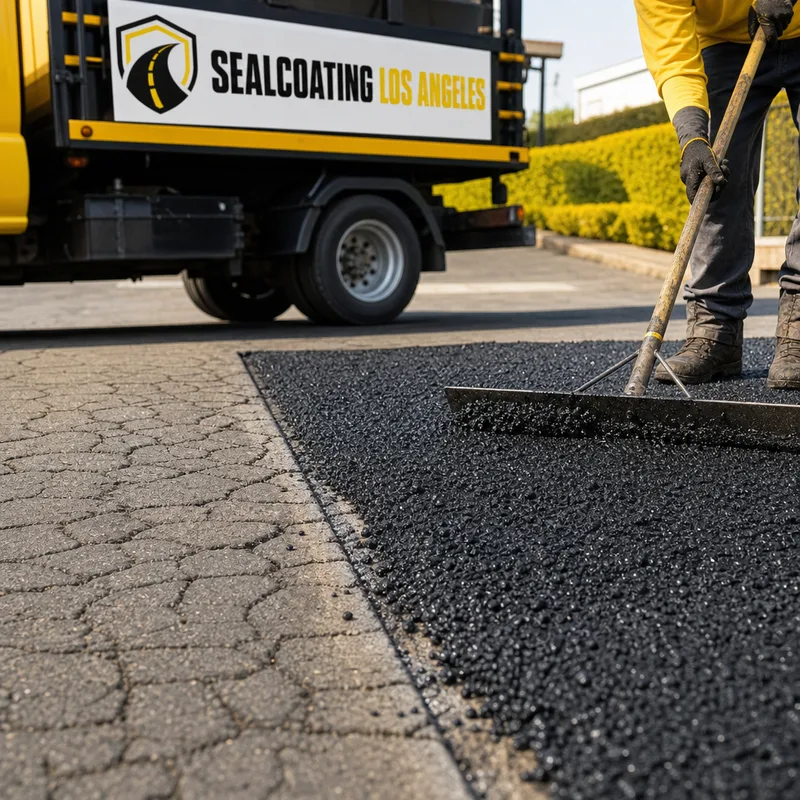
Each element here answers something specific about pavement that moves daily and sits under hard sun and moving air.
Cracks are treated as their own job and completed first. Filling them properly is what gives the coating a continuous surface to protect instead of a set of gaps to span.
Filler has to stay flexible through a surface that keeps expanding and contracting. A rigid fill in moving asphalt cracks again at the same line within a season.
Work is scheduled to the temperature range that lets material bond and cure as intended, which sometimes means an early start rather than a convenient one.
Airborne grit landing on a wet coat is permanent. Conditions get checked before application and the schedule shifts when the air is carrying sand.
A surface that feels firm in dry air can still be soft underneath. We give a cure window based on conditions rather than on how the top reads to the touch.
We assess the cracking, the surface, and the daily temperature pattern, then identify the window the work should happen in.
Cracks are opened out where needed and cleaned thoroughly. A fill placed into dusty or damp crack walls will not bond regardless of the material used.
Filler goes in at a workable temperature and is chosen to keep moving with the asphalt rather than setting rigid and splitting again.
On the day of application we check temperature and wind. If sand is moving, the coat waits, because grit in a wet surface does not come back out.
The coat goes down evenly and the surface is kept closed for a window set by the real conditions, not by how firm the top layer feels.
Because crack work usually leads here, the split between repair and coating matters to the final figure. Crack filling is quoted on linear footage and commonly falls between $350 and $1,500, which on a cracked surface can be the larger half of the job.
Sealcoating itself follows the usual pattern: residential driveways around $250 to $600, larger ones $700 to $900, and paved areas measured at roughly $0.20 to $0.35 per square foot, moving toward $0.55 to $0.85 where prep is heavy. Where asphalt has broken up rather than cracked, patching starts near $2,500. We quote both parts separately in writing.
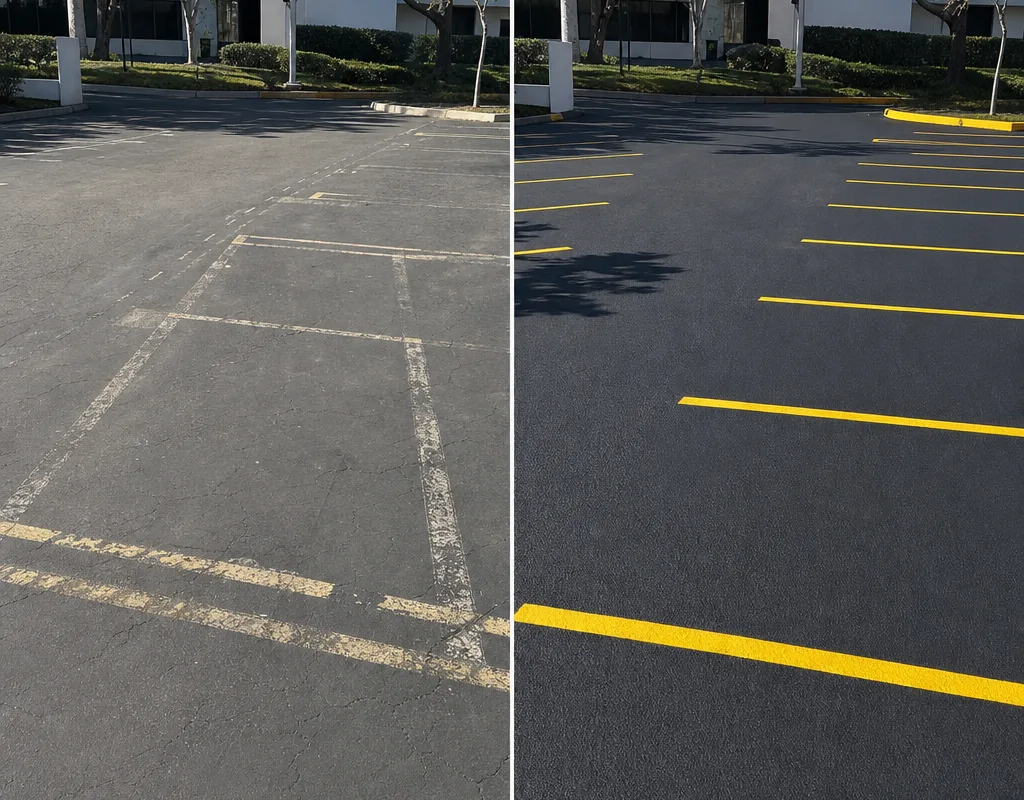
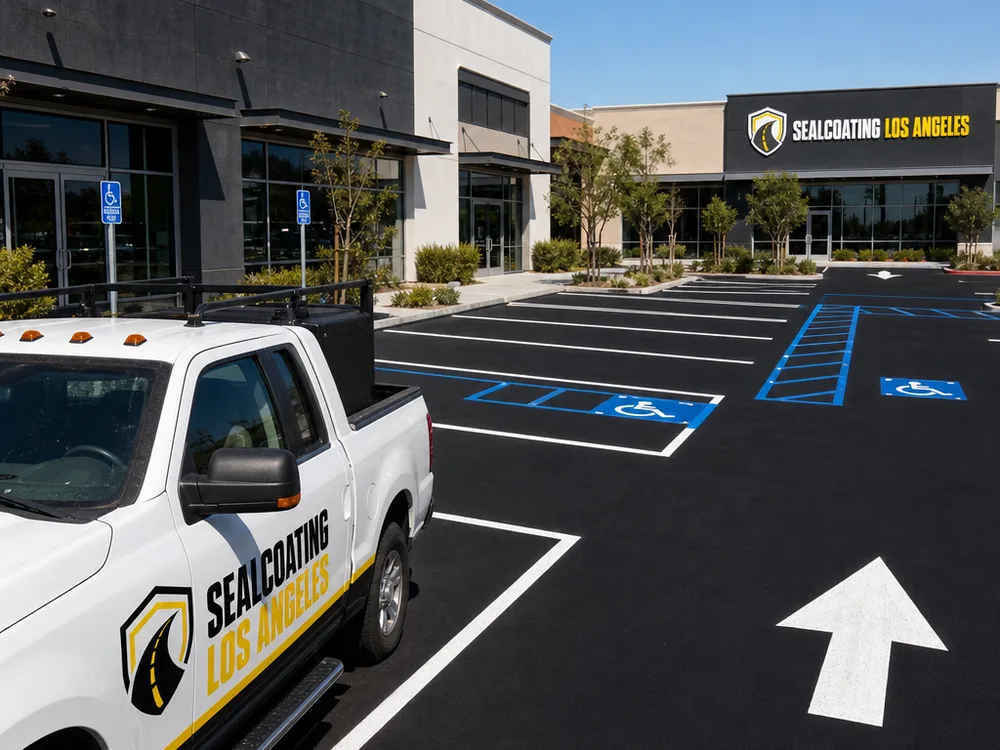
Book Your Free InspectionCleaned crack edges ready for sealant, completed coating, and the controls used around a surface while it cures.
What property owners out here ask once they notice the same cracks returning each year.
Usually because the fill could not move with the asphalt. Out here the surface expands and contracts through a wide daily range, and a rigid material simply splits again at the same line. A flexible sealant placed into properly cleaned crack walls tolerates that movement, which is why the preparation and the material choice both matter more than the filling itself.
No. Sealcoat is a thin protective layer against water and sun, and it has no ability to hold two moving edges together. Coating over open cracks hides them for a few weeks and then they reappear through the new surface. The crack work comes first and the coating protects what is left.
It does, and it is one of the few things that will stop us working. Sand carried onto a wet coat becomes embedded in it as it cures, and there is no way to take it back out afterward. If the air is moving grit on the scheduled day, the sensible answer is to wait rather than hand over a surface with it set into the finish.
Less a season than a set of conditions: surface temperature within a workable range, reasonably still air, and no moisture in the cracks. There are suitable days across much of the year here. We look at the specific window rather than booking by month and hoping conditions cooperate.
Dry air can firm the top quickly, which misleads people into using the surface early. Underneath it may still be soft. We give a window based on the actual conditions on the day, and it is worth respecting even when the surface feels ready to the touch.
Yes. We work from our Los Angeles shop and cover the high desert as part of our service area, so the crew and equipment come to you. It means scheduling tends to be arranged in blocks rather than at an hour's notice, which we will be straightforward about when we set the date.
Seeing the same cracks open up again each year? Get the crack work scoped before any coating is scheduled.
Book Your Free InspectionTell us roughly how much cracking there is and how the surface has behaved over the last few years. We will separate the crack sealing from the coating, quote each, and schedule to a window that suits the conditions.
Request a quote
Send the surface, its size, and what you are seeing. We reply with next steps and a time for a walkthrough.