
Prep That Actually Sticks
We remove loose material and vegetation, clean the crack walls, and dry the area as needed so the sealant bonds instead of sitting on dust.
Serving Los Angeles, California & surrounding areas
Mon–Fri 8am–6pm Sat 9am–2pm
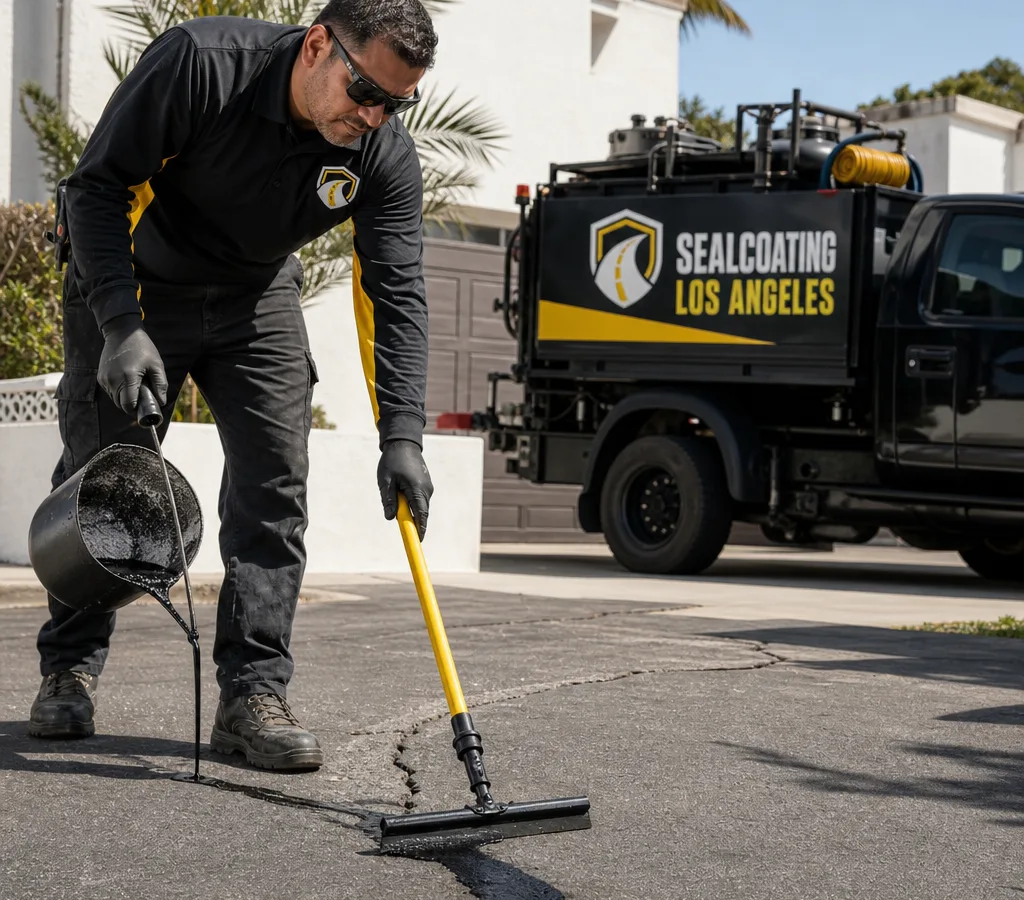
Stop water from getting under your asphalt, slow down spreading cracks, and keep your driveway looking clean with professional crack sealing and clean edges.
Driveway crack filling Los Angeles property owners schedule early because cracks rarely stay small. Once water and grit get into an opening, traffic works the edges loose and the crack widens. Even in a mild climate, irrigation runoff, occasional heavy rain, and regular car turning loads can push water and debris into the base and speed up raveling.
Crack filling is a targeted repair: we clean and prep the crack, then install the right sealant so the joint can move without letting water back in. It is one of the simplest ways to protect asphalt and delay bigger repairs like patching or resurfacing. If you are also planning to protect the whole surface after repairs, Sealcoating Los Angeles can coordinate crack work with asphalt sealing in Los Angeles so the finish coats go on over a stable, sealed surface.
Book Your Free InspectionNot every crack should be treated the same. For asphalt crack repair in Los Angeles, we look at the crack pattern, width, and movement, then choose a repair approach that fits the pavement.
Common situations we handle:
The goal is straightforward: a clean, sealed crack with strong adhesion at the edges, finished flush enough that tires do not peel it up during turns.
Book Your Free Inspection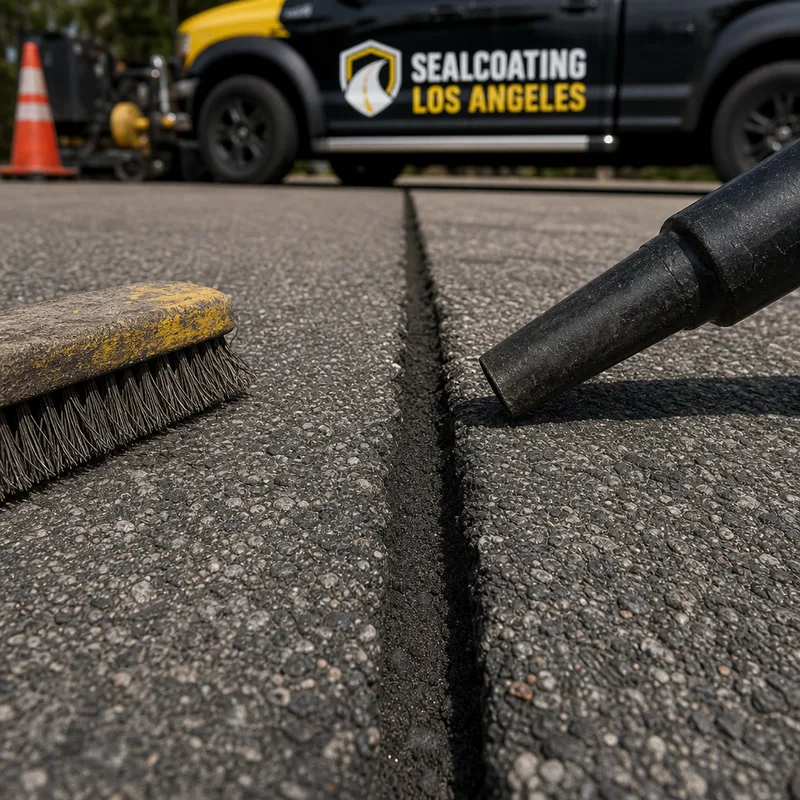
We remove loose material and vegetation, clean the crack walls, and dry the area as needed so the sealant bonds instead of sitting on dust.
We use flexible, rubberized crack sealants designed for asphalt expansion and contraction. The right product matters more than a thick coat.
We tool the sealant for a neat profile and reduce tracking. For driveways, this helps avoid pull-up during tight turns.
If the cracking pattern points to base failure, we flag it. Crack filling is maintenance, not a fix for structural breakdown.
We plan around access and parking so you can keep cars moving, whether it is a home driveway or a shared lot.
Lasting crack repair begins with understanding the pavement and preparing every opening before sealant is placed.
We walk the driveway or lot, note crack types, and identify areas that may need patching instead of filling. You get a clear scope of what will be sealed and what will not.
We remove weeds and loose aggregate, then clean out debris with brushing and blowing. Good prep is what keeps the sealant bonded at the crack walls.
We install the appropriate crack sealant for the crack width and movement. For wider openings, we may build the fill in a controlled way so it cures properly.
We squeegee or tool the surface to leave a finished profile that resists tracking and peel-up. If conditions call for it, we use sand or blotter to reduce tack at the surface.
We confirm when it is safe to drive on the area and how to stage parking. For shared properties, we can phase work to keep access available.
Driveway crack filling in Los Angeles typically runs about $250 to $900 for most homes, depending on how many linear feet of cracking needs prep and sealant. Small, localized crack sealing can be near the low end, while driveways with widespread cracking, edge work, and heavy cleaning land higher.
Final pricing depends on crack width and depth, how much vegetation or loose asphalt must be removed, surface dryness, access for equipment, and whether any areas need patching instead of filling. The exact cost is confirmed after an on-site evaluation of the pavement condition.
Book Your Free Inspection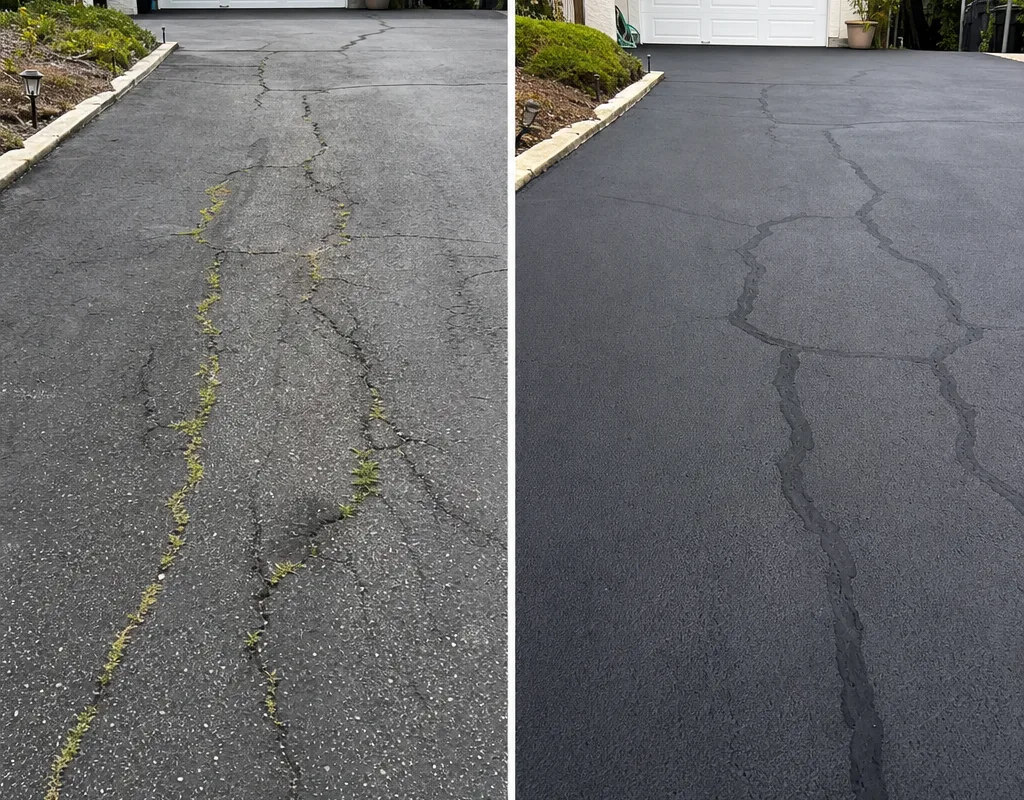
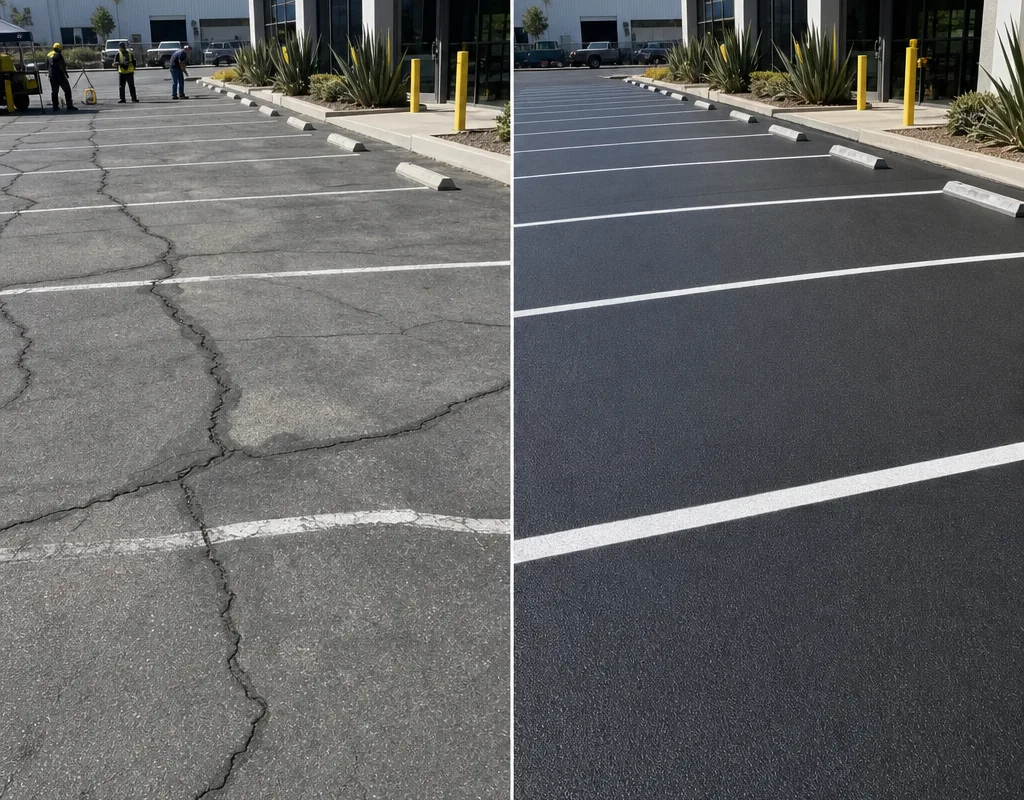
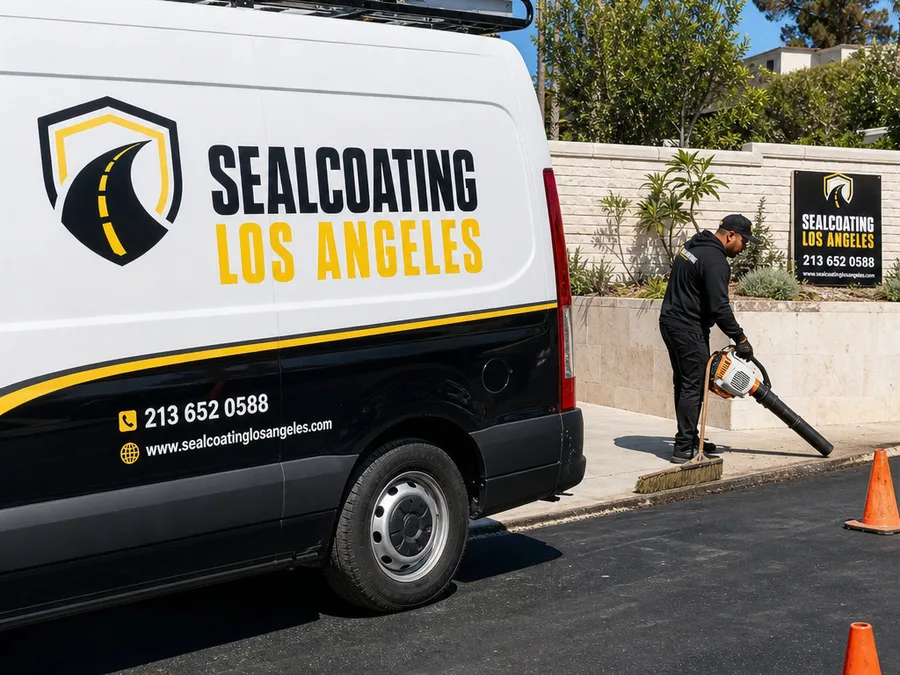
Parking lot crack filling Los Angeles managers schedule is often driven by liability and optics. Cracks catch heels and carts, and they also let water undermine the base under traffic lanes. For commercial asphalt, sealing early can help reduce how fast cracks spread into interconnected patterns.
We can stage work to keep entrances open and limit blocked stalls. For lots, we also pay attention to high-stress areas like tight turn radii, delivery paths, and the edges along curbs where water sits longer. If striping is present, we plan around it so the finished cracks do not interfere with clean line work later.
If you are near Downtown and need straightforward coordination, our team is based at 1145 W 7th St, Suite 5, Los Angeles, CA 90017, which helps us schedule crack sealing work efficiently for nearby properties.
Book Your Free InspectionIf you want your asphalt evaluated before the cracks spread, share a few photos and the approximate size of the area, and we will recommend the right crack repair approach and a realistic timeline.
Book Your Free InspectionIn practice, asphalt crack sealing in Los Angeles usually refers to sealing working cracks with a flexible, rubberized sealant to keep water out, while crack filling can be used more broadly for placing material into non-working or smaller cracks. The right choice depends on crack movement, width, and whether the surrounding asphalt is stable, which is why an on-site look matters.
Yes, driveway crack repair can still be done on previously coated asphalt, but the crack edges must be cleaned well so the sealant bonds to sound material. If the existing coating is peeling or the asphalt is raveling, we may recommend prep or localized patching first so the crack repair does not detach with the loose surface.
Most driveway crack filling jobs can be completed in a single visit, and many are ready for light traffic later the same day, but the timing depends on crack size, temperature, and the sealant used. We confirm a parking and access plan on-site so you know exactly when it is safe to drive across repaired areas.
Sometimes. Routing can help in specific situations by creating clean, consistent crack walls for better sealant adhesion, but it is not necessary for every driveway. We choose routing based on crack width, edge condition, and whether the asphalt is sound enough to benefit from that extra prep.
No. Alligator cracking usually indicates base failure, so crack filling alone will not last because the pavement continues to flex and break. We can seal around the perimeter to help reduce water intrusion, but the durable fix is removing and patching the failed section.
Cracks typically return when the underlying issue is still present, such as a weak base, poor drainage, heavy turning loads in the same spot, or untreated edge failure. Using the correct sealant and proper cleaning helps, but if the asphalt is structurally failing, a patch or resurfacing plan is the next step.
Tell us what you are seeing on the driveway or parking area and when you need access kept open. We will confirm whether crack filling is the right fix and provide a clear, written scope before any work starts.